In a world where states claim to fight drug trafficking and protect their societies, the occupied Western Sahara stands out as a shocking exception. According to local testimonies and human rights accounts, the region is turning into one of the most dangerous spaces where drugs are allowed to spread as a silent weapon to break the will of the Sahrawi people and silence their voices.
Economic Repression as a Tool of Control
Thousands of Sahrawis suffer from systematic exclusion from the labor market, despite holding diplomas and qualifications that should grant them access to jobs in both public and private sectors. Yet, as many victims report, employment is conditioned on political loyalty — public allegiance to the Moroccan king in exchange for work — with the constant threat of dismissal if any dissent appears in the future.
In this way, work is no longer a basic right but a tool of blackmail, pushing many young people into unemployment, poverty, frustration, and loss of hope.
Drugs as a Silent Weapon
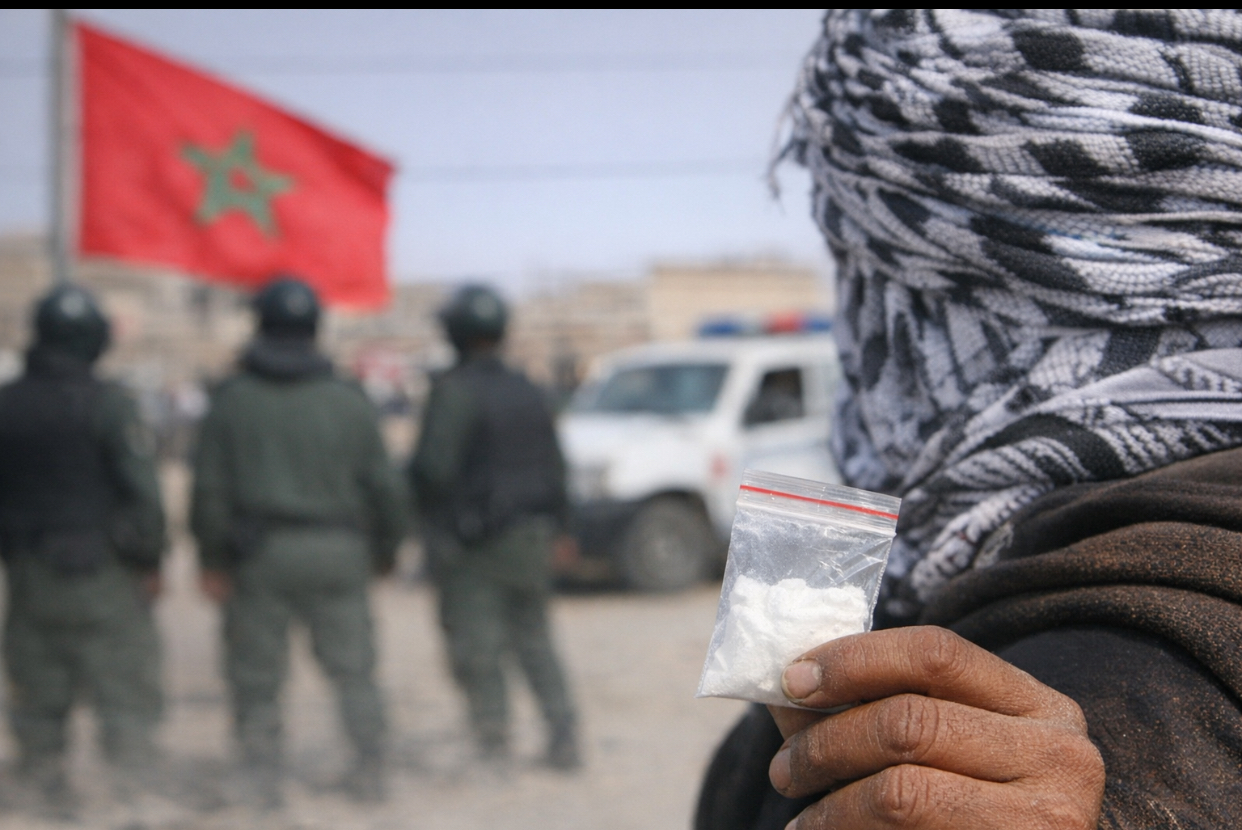
Pressure has not stopped at the economic level. Numerous testimonies speak of an unprecedented flooding of the occupied Sahrawi cities with all kinds of narcotics, widely available and at extremely low prices. If these accounts are true, the region has become one of the cheapest places in the world to access hard drugs — a terrifying reality that raises serious questions about who protects these networks and who benefits from them.
Such massive availability of drugs cannot be seen as ordinary criminal activity alone. It appears instead as a deliberate strategy to destroy society from within by:
• damaging the health of the youth,
• breaking families,
• spreading crime and insecurity,
• and draining the energy of peaceful resistance.
A Systematic Destruction of the Sahrawi People
For many Sahrawis, this is not coincidence but a policy aimed at transforming a generation of rights holders into victims of addiction and despair, rather than conscious citizens demanding freedom and dignity. When a person is besieged in livelihood, monitored in opinion, and surrounded by poison, survival itself becomes a daily struggle.
Between Accusation and the Duty to Investigate
These alarming claims urgently call for independent and transparent international investigations. Their consequences go far beyond the Sahrawi people; they threaten regional stability and feed transnational criminal networks. Silence, in this case, means abandoning an entire community to face its fate alone.
A Final Word
For many of its people, Western Sahara today is not only an occupied land, but a testing ground for every form of pressure — economic, political, and social. Describing it as “the cheapest place in the world to buy cocaine” is a shocking headline, but behind it lies a far more dangerous reality: an attempt to break a people before breaking their will.
Yet history teaches us that peoples who endure oppression can turn pain into awareness, and awareness into a force that cannot be defeated.