
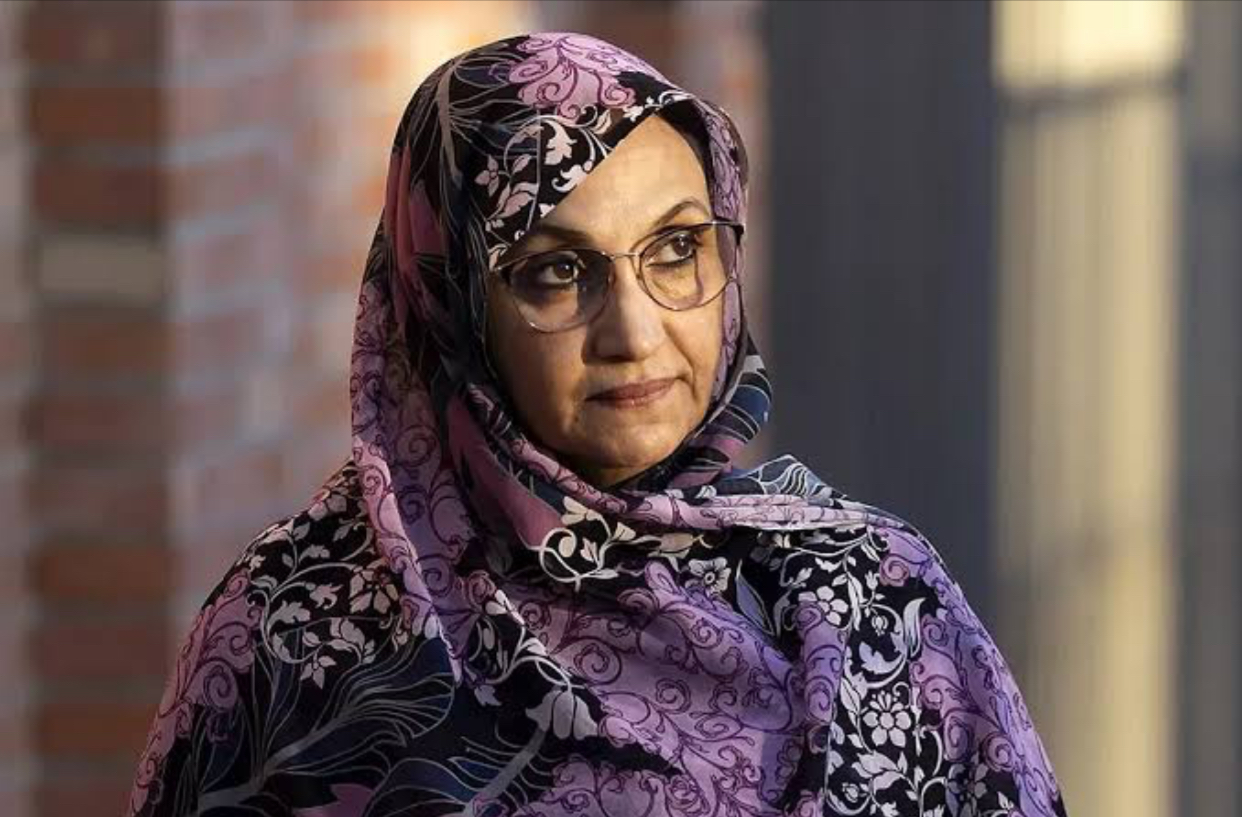
On Wednesday, the airport of Dakhla, in the occupied territory of Western Sahara, ceased to function as a civilian travel hub and instead revealed itself as a tool of political repression, as Moroccan occupation authorities deliberately prevented renowned Sahrawi human rights activist Aminatou Haidar from traveling to Madrid.
A Legal Journey, an Illegal Obstruction
Haidar, accompanied by her daughter, had completed all required travel procedures, including check-in and ticket validation for a Ryanair flight to Madrid. Everything proceeded normally—until she reached the security checkpoint, where the obstruction began without any legal or security justification.
Deliberate Delays and Abusive Procedures
According to Haidar, the officer operating the scanning device abruptly shut down the security scanner for nearly half an hour, creating an unexplained delay that appeared intentional rather than technical.
She was then singled out—unlike any other passenger—and ordered to undergo additional screening of her belongings, followed by being escorted into a private room for a full body search that involved forced undressing.
Haidar described the procedure as “humiliating, degrading, and a clear violation of human dignity.”
Targeted Because of Identity and Activism
What makes this incident particularly alarming is that no other passengers were subjected to similar treatment, underscoring that this was not a standard security measure but a targeted act of discrimination based on Haidar’s identity and long-standing human rights activism.
When she attempted to object or request an explanation, senior security officials intervened and upheld the decision, confirming that the abuse was institutionally sanctioned, not an individual excess.
Airline Complicity Through Silence
The harassment did not stop with security forces. A Ryanair employee initially refused to hand over her boarding pass, only doing so after persistent demands—by which time the delay had caused her to miss the flight. This raises serious concerns about the role and responsibility of international airlines operating in occupied territories.
Surveillance, Harassment, and an Ongoing Siege
Haidar had arrived in Dakhla three days earlier to visit a seriously ill relative. Sources close to her report that she was placed under continuous surveillance by Moroccan police and intelligence services throughout her stay—monitoring that extended all the way to the airport.
As of the time of writing, Haidar remains stranded in Dakhla, with reports indicating that the house where she is staying is surrounded by Moroccan police forces, prompting grave concerns for her personal safety.
A Clear Message of Intimidation
This incident is not an isolated case. It fits into a broader, systematic pattern of repression targeting Sahrawi activists in the occupied territories, aimed at:
• Preventing them from reaching international forums
• Blocking communication with media and human rights organizations
• Enforcing isolation on Western Sahara and silencing its people
The prevention of Aminatou Haidar from traveling once again demonstrates that occupation in Western Sahara is not limited to territorial control, but extends to controlling bodies, movement, and voices.