By: Editorial Team – sahararepublic.com
Date: April 21, 2026
In a scene that reflects the scale of systematic repression carried out by Moroccan occupation authorities in Western Sahara, even moments of joy have not been spared. On Tuesday evening, the family of Sahrawi activist Abdelmoula Ahmed Al-Hafed was subjected to a serious assault while attempting to organize a modest reception following his release from prison after ten years behind bars—widely seen as politically motivated punishment for his activism and union positions.
The family had chosen to relocate temporarily to the area of “Loughat Khaira” in the Agrifiya region, east of occupied Boujdour, hoping to avoid the tight security siege imposed on their home in the city, where visitors had already been prevented from accessing the house. They believed that moving away from the urban center might allow a limited space of freedom. However, repression followed them even into the open Sahrawi landscape.
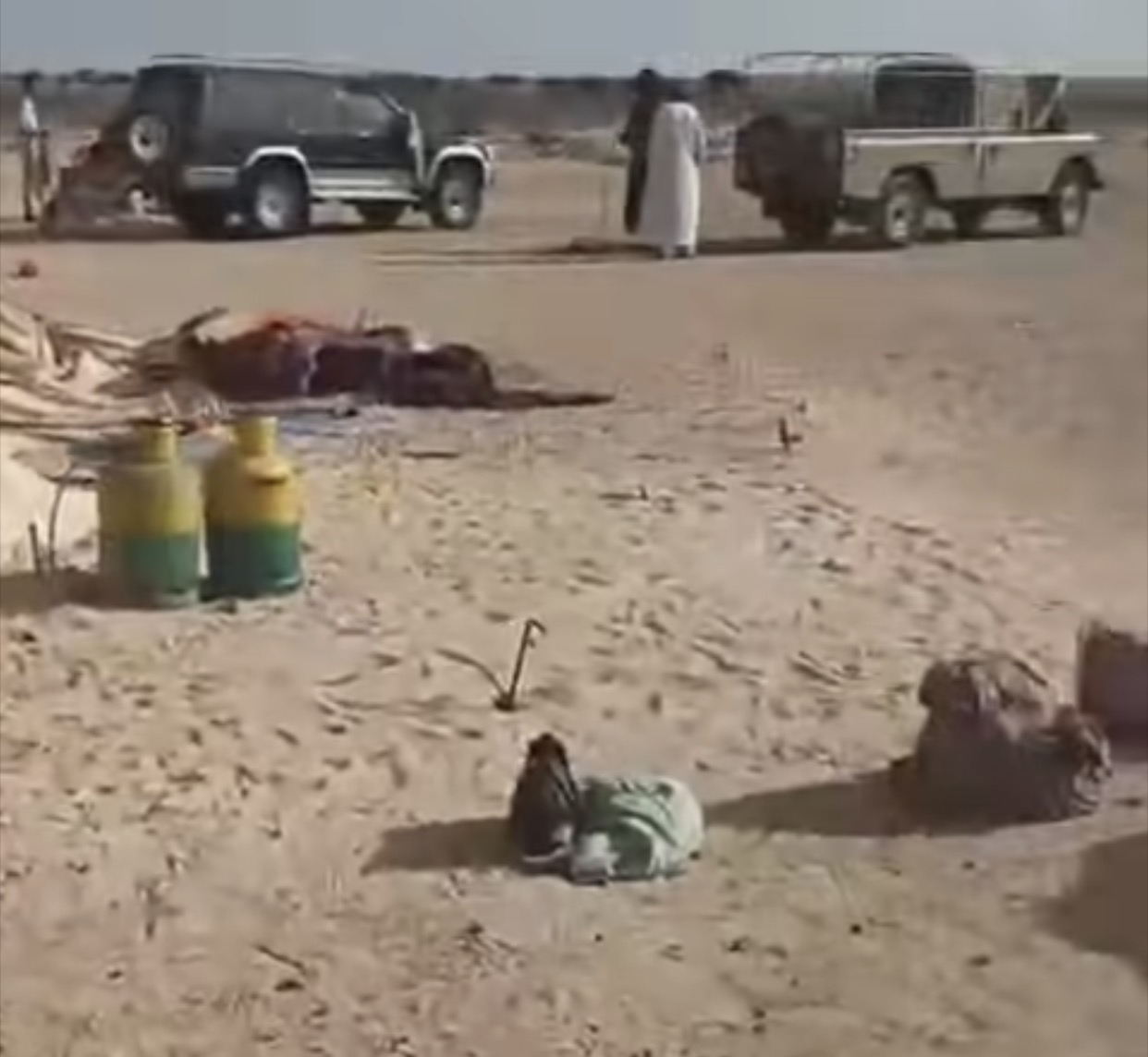
According to consistent field reports, six four-wheel-drive vehicles belonging to Moroccan forces stormed the site without warning, carrying a large number of security personnel in a clear show of force and intimidation. The forces did not stop at surrounding the area but proceeded to cut the ropes securing the tents set up to host guests—an act laden with symbolic cruelty—effectively dismantling the simple space of celebration and leaving families, including women and children, exposed to the scorching heat.
Members of the occupation administration also issued direct threats to the family and ordered them to leave the area immediately, in a blatant violation of the right to peaceful assembly and a continuation of policies that extend repression beyond city limits to any place Sahrawis attempt to gather.
In a statement, Abdelmoula Ahmed Al-Hafed strongly condemned what his family and guests were subjected to, stressing that “this is not an isolated incident, but another episode in a long chain of systematic repression targeting every free Sahrawi voice.” He added that the occupation authorities are “seeking to break the collective will of the Sahrawi people by targeting individuals and their families, even in the most basic aspects of daily life.”
He further noted that preventing well-wishers from reaching his family, both inside and outside the city, reveals the extent of the siege imposed on him and reflects the authorities’ fear of any form of popular solidarity.
The activist called on international human rights organizations, including United Nations bodies and the UN Security Council, to take urgent action by opening an independent investigation into these violations and putting an end to what he described as “systematic injustice” affecting his family and the Sahrawi people at large.
What occurred east of Boujdour cannot be separated from a broader context of documented abuses highlighted in growing human rights reports, which indicate a dangerous escalation in targeting Sahrawi activists—not only through arrests and trials, but also via social and familial pressure aimed at isolating them from their communities.
What was meant to be a day of celebration for freedom turned instead into further evidence that freedom in Western Sahara remains deferred, and that the occupation continues to impose a reality of repression that crosses all boundaries—even those that should protect simple human joy.