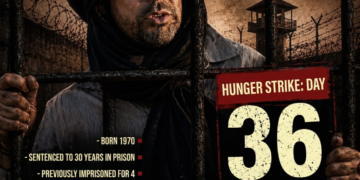

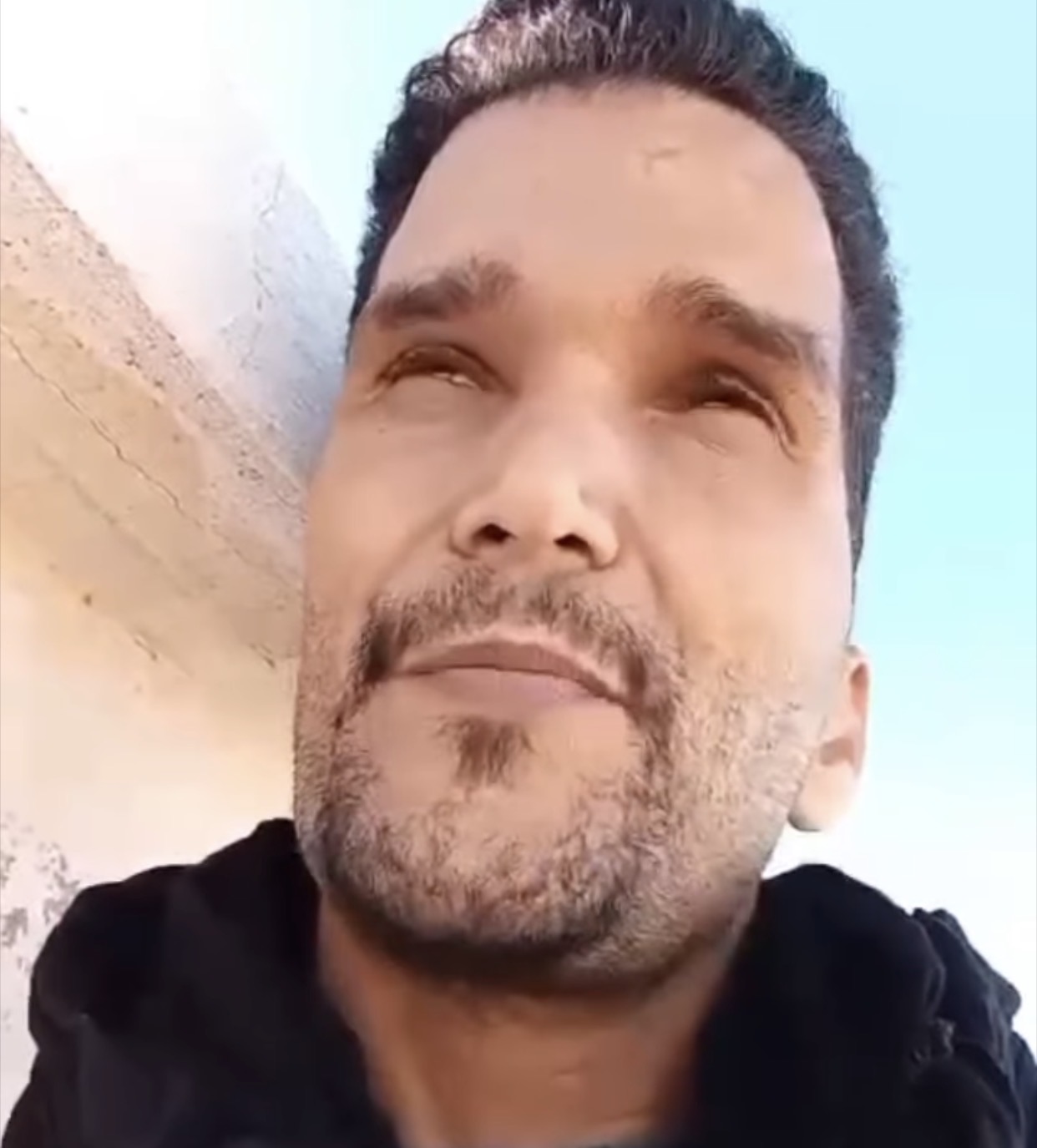
Monday morning did not begin unusually inside a quiet family tent south of Boujdour. But within moments, silence was shattered by a sudden raid carried out by Moroccan security forces, pulling a man who had only recently regained his freedom back into a new cycle of suffering. Abdelmoula El Hafidi, who spent ten years behind bars, found himself once again at the center of an operation his family describes as an unlawful abduction.
According to his sister, the details are deeply alarming: a raid without a warrant, a swift arrest, and forced transportation under inhumane conditions. For hours, he was reportedly held without food or water before being driven far from his home and abandoned in a remote area known as “Lbir,” dozens of kilometers from Boujdour. This was not a release—it bore the hallmarks of deliberate abandonment.
What gives this incident even greater weight is what El Hafidi revealed after his release. He stated that his detention was not arbitrary but directly linked to a video he had published after leaving prison, in which he spoke about his decade-long experience behind bars. During interrogation, the focus was reportedly placed on that statement, suggesting that his words had effectively become the reason for his re-arrest.
This raises serious questions about the limits of freedom of expression in the region. Does release from prison truly mark the end of punishment, or merely a shift into less visible, more complex forms of pressure? Targeting a former detainee for speaking publicly about his experience reflects a growing intolerance toward narratives that fall outside official discourse.
Beyond the political dimension, the human aspect remains stark. An elderly mother left behind without explanation, a family plunged into uncertainty, and a man abandoned in an isolated landscape after enduring years of imprisonment. These are not minor details—they are the essence of the story.
This case once again brings attention to ongoing concerns surrounding the treatment of Sahrawi civilians and raises broader questions about compliance with international legal standards regarding arbitrary detention and humane treatment.
What happened is not an isolated event. It is a signal—one that suggests certain issues remain unresolved, and that, in some contexts, speaking out can carry consequences as heavy as silence.
Editorial Team – sahararepublic.com