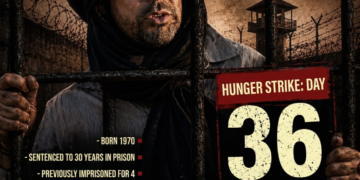


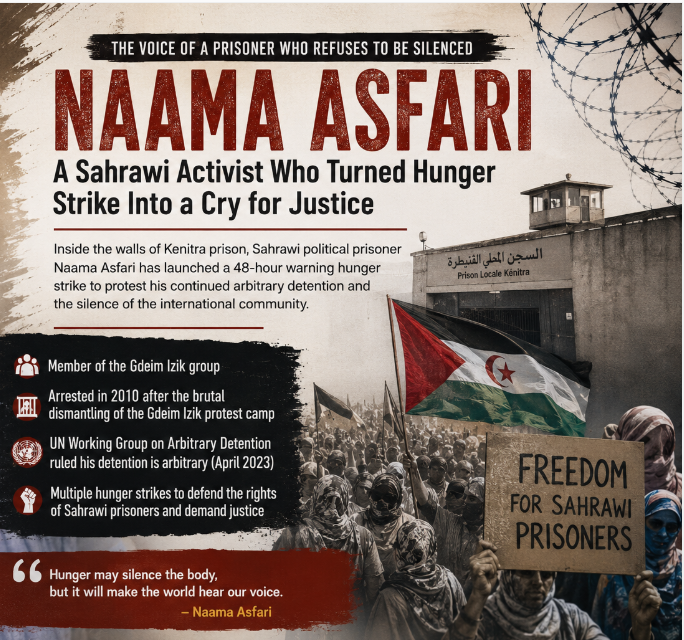
Inside a narrow cell at the central prison of Kenitra, Sahrawi activist Naama Asfari chose to confront silence with the weapon of hunger. His 48-hour warning hunger strike was not merely a symbolic protest, but a powerful message filled with pain, determination, and defiance in one of the most prominent Sahrawi human rights cases on the international stage.
Naama Asfari’s name is no longer simply associated with a detainee from the Gdeim Izik group. Over the years, he has become a symbol of Sahrawi resistance inside Moroccan prisons and a central figure in a struggle where politics, human rights, justice, and resilience deeply intersect.
Who Is Naama Asfari?
Naama Asfari was born into a Sahrawi environment shaped by resistance and attachment to national identity. From an early age, he became involved in defending the Sahrawi people’s right to self-determination, eventually emerging as one of the best-known Sahrawi human rights activists internationally.
Those close to him describe him as calm and composed, yet behind that calm stood a man firmly convinced that freedom is never granted freely, but earned through perseverance and struggle. For that reason, his voice remained present throughout many of the major human rights events that have marked Western Sahara over the past decades.
Gdeim Izik.. The Camp That Changed Everything
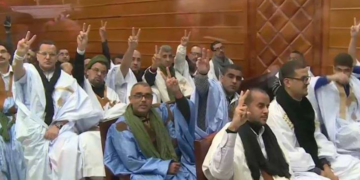
In 2010, the area of Gdeim Izik near the city of Laayoune became the scene of one of the largest Sahrawi protest movements. Thousands of Sahrawis set up tents in a protest camp demanding dignity and social and political rights.
However, the dismantling of the camp by force triggered violent clashes and led to the arrest of several Sahrawi activists, including Naama Asfari. Since then, he has faced years of imprisonment, trials, and repeated hunger strikes.
International human rights organizations continue to consider the Gdeim Izik case highly controversial from a legal and human rights perspective, especially after UN opinions pointed to arbitrary detention and serious violations during the judicial process.
Why Has Naama Asfari Returned to the Spotlight?
Naama Asfari’s name resurfaced after he announced a 48-hour warning hunger strike on Thursday, May 11, protesting his continued detention and prison conditions, according to statements delivered by his family to the League for the Protection of Sahrawi Prisoners in Moroccan Prisons.
His family stressed that this step is not isolated, but part of an ongoing series of protest actions carried out by Sahrawi prisoners over the years in an effort to break what they described as “systematic silence and indifference” surrounding their case.
At a time when the world is overwhelmed by international crises, the prisoners of Gdeim Izik are once again attempting to draw attention to their cause through one of the harshest forms of protest on the human body: the hunger strike.
Three Years of Waiting
According to the family, the current strike also comes after three years have passed since the United Nations Working Group on Arbitrary Detention issued its opinion in April 2023, without any concrete measures being taken to implement the recommendations concerning the prisoners.
This delay, the family argues, pushed Naama Asfari and his fellow detainees to continue protesting inside prison walls, sending a direct message to the international community and UN bodies to fulfill their legal and humanitarian responsibilities.
Hunger Strike.. The Battle of Empty Stomachs
Throughout the history of liberation movements, hunger strikes have never been ordinary protests. They have always represented a moral weapon used by prisoners when all other forms of expression are denied.
Naama Asfari understands that hunger can sometimes speak louder than words, and that empty stomachs are capable of reaching the conscience of the world more powerfully than political speeches. That is why he continues this form of protest despite the serious physical and health risks it carries.
Between Prison and Symbolism
Over the years, Asfari has evolved into a symbol whose story goes far beyond individual imprisonment. He has become part of the broader Sahrawi narrative of resistance and steadfastness. For many Sahrawis, his name represents the image of a prisoner who refused to surrender despite years behind bars.
Meanwhile, international human rights organizations continue to call for closer monitoring of the conditions of Gdeim Izik prisoners and for serious discussions regarding their detention and fundamental rights.
Will the World Listen This Time?
The question accompanying every new hunger strike by Sahrawi prisoners remains the same: Will the international community finally act? And will these protests succeed in bringing the case back to the forefront of political and human rights attention?
So far, there is no clear answer. But one thing remains certain: from behind prison walls, Naama Asfari still believes that the human voice can rise above iron bars, and that the cause of freedom never dies, no matter how long the silence lasts.