sahararepublic.com _ Occupied Laayoune – 6 July 2026
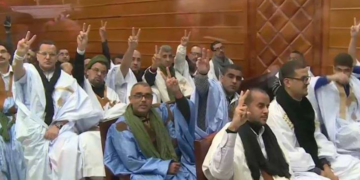
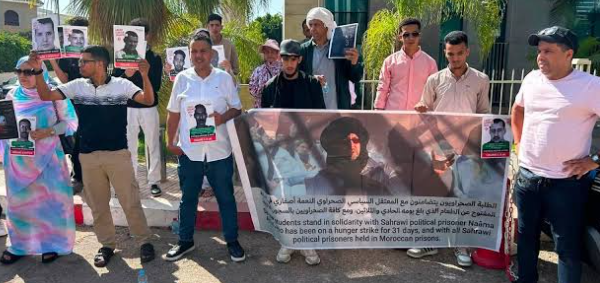
Amid the continued deterioration of the health condition of Sahrawi political prisoner Naâma Abdi Moussa Asfari, the group of Gdeim Izik prisoners, held in various Moroccan prisons, announced that they will begin a warning hunger strike on 7 and 8 July 2026. According to a statement issued by the League for the Protection of Sahrawi Prisoners in Moroccan Prisons, the move represents an urgent protest aimed at drawing attention to what the organization describes as a worsening humanitarian situation affecting Sahrawi prisoners.
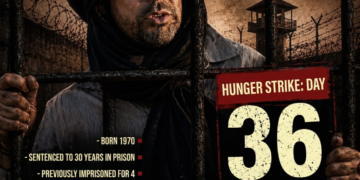
The League stated that this action comes as Naâma Asfari continues his open-ended hunger strike, which began on 8 June 2026 inside Kenitra Central Prison, in protest, according to the statement, against his detention conditions and what he considers violations of his fundamental rights. The organization warned that his health situation has become increasingly concerning and requires immediate intervention to safeguard his life.
According to the prisoners’ families, the detainees decided to undertake this collective hunger strike in solidarity with their fellow prisoner, holding the Moroccan authorities fully responsible for his safety and for the well-being of all prisoners participating in hunger strikes. They stressed that continued disregard for their humanitarian demands could lead to consequences that may become impossible to reverse.
Through their families and the League, the prisoners called for urgent measures, including immediate action to protect Naâma Asfari’s life and ensure access to necessary medical care, the immediate and unconditional release of all members of the Gdeim Izik prisoner group, an end to what the League describes as ongoing violations inside prisons, and compensation for the harm allegedly resulting from years of detention.
The League emphasized that this protest represents a new stage in a peaceful struggle, warning that further deterioration of the situation may lead prisoners to undertake additional escalation measures if their demands continue to be ignored.
The organization further stressed that the case of the Gdeim Izik prisoners has previously been addressed by several United Nations human rights mechanisms, referring in particular to the opinion issued by the UN Working Group on Arbitrary Detention and recommendations by the UN Committee Against Torture, as international references calling for respect for detainees’ rights and protection in accordance with international law.
In conclusion, the League for the Protection of Sahrawi Prisoners issued an urgent appeal to the United Nations Secretary-General, the UN High Commissioner for Human Rights, the International Committee of the Red Cross, the World Health Organization, and all relevant UN Special Procedures, urging immediate intervention to send independent missions to assess the prisoners’ conditions, protect their lives and physical integrity, and take urgent measures to prevent a humanitarian crisis inside prisons.
The League stressed that protecting the lives of hunger-striking prisoners is a humanitarian and legal responsibility that cannot be postponed, calling on the international community to translate its human rights commitments into concrete actions that guarantee respect for human dignity, the rule of law, and the protection of the right to life and physical safety of detainees.